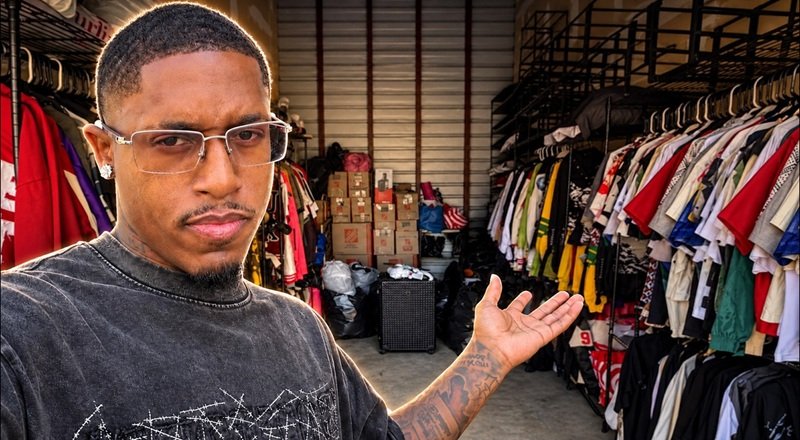
From Millions in Views to a Storage Unit: What Corey Pritchett Jr.’s Reset Reveals About Turning Income Into Wealth
Corey Pritchett Jr. built one of Black YouTube’s most-watched family brands, yet by his own account in an October 2026 video, he is living between short-term rentals and a storage unit while managing child support, arrears, and a closed bank account. His story exposes the gap between income and infrastructure, and shows why Black creators and entrepreneurs who earn quickly need the plumbing of wealth in place before the money arrives.
Nearly everything public about Pritchett’s finances comes from his own videos, a 2025 court filing, and third-party net worth estimates ranging from roughly $1 million to $5–8 million, some of which blend in figures from his ex-wife, Carmen. None of those estimates are audited. What follows analyzes the reported picture, not a verified balance sheet.
The Earning Years
At its peak, the Carmen and Corey channel drew several million subscribers, supported by a family channel and Pritchett’s solo Life With Corey / CoreySSG channel, which sits around 940,000 subscribers in 2026. Revenue came from AdSense, sponsorships, SSG merchandise, and social promotions. His content featured a fleet of performance vehicles, including Chargers, Hellcats, and trucks, and reports referenced a purchase of roughly 33 acres in Alabama. In the new video, Pritchett says a recent tax return, his first in six to seven years, showed prior-year income above $1 million.
The Seven-Year Filing Gap
The filing gap is the most consequential detail in the story. The IRS charges a failure-to-file penalty of 5% of unpaid tax per month, capped at 25%, on top of failure-to-pay penalties and interest. No statute of limitations applies to assessments on returns that were never filed, and refunds from years more than three years past are forfeited. Unfiled years also leave no documentation of income for mortgage underwriters. To a lender, undocumented earnings don’t exist.
The Liquidity Shock
In late 2024, Pritchett’s attorney sent a cease-and-desist letter alleging that his bank details and Social Security number had been posted online. Pritchett has claimed more than $200,000 was taken from his accounts before they could be frozen, a figure that hasn’t been independently verified. In the 2026 video, he says the resulting identity theft damaged his credit and complicated housing and financing.
The Court Record
In January 2025, a financial affidavit filed in an aggravated kidnapping case in Harris County, Texas, which was later dismissed, listed $0 monthly income and no assets. Pritchett requested a public defender. That snapshot contrasts sharply with both his earlier lifestyle content and his later report of seven-figure income, illustrating how quickly visible wealth can disappear when it sits in depreciating assets and personal accounts rather than protected structures.
The Current Squeeze
Pritchett describes a cash-flow structure dominated by fixed and emergency outflows:
- $21,000 in child support obligations
- Alimony arrears, which he links to the confiscation of his passport and expired identification
- A closed bank account after roughly 60 days in the negative, leaving him reliant on Cash App and PayPal. Closures like this are commonly reported to ChexSystems, which can restrict new accounts for up to five years.
- A BMW in the shop since about June 2026 with engine damage, alongside rental-car, hotel, and short-term housing costs
Each of these functions as a liquidity tax. Money spent on a rental car while the primary vehicle sits in a shop, or on a hotel because a damaged credit file can’t support a lease, is money that never compounds. Pritchett’s stated plan includes working with a Houston tax preparer, retrieving the BMW, buying a house, and expanding his mentoring platform, SSG University. The sequencing matters, since the home purchase depends on the clean tax record coming first.
The Structural Layer
Federal Reserve data shows Black households hold roughly one-sixth the median wealth of white households. One contributing factor is that high Black incomes, particularly in entertainment, sports, and the creator economy, frequently arrive without a family office, an inherited CPA relationship, or a generational playbook. Platform income is volatile, uncollateralized, and highly visible. Without a professional team behind it, a seven-figure year can be followed by a zero-asset affidavit.
Strategic Playbook
1. File Every Year, Even When You Can’t Pay in Full
Filing on time avoids the steeper failure-to-file penalty and starts the statute-of-limitations clock. If you owe, set up an installment agreement. Your returns are also your income documentation, the record every lender, landlord, and investor will ask to see. If your income is irregular, pay quarterly estimated taxes and move 25–35% of gross revenue into a dedicated tax account the day it lands.
2. Separate the Business From the Person
Run creator or freelance income through an LLC or S-corp with its own EIN, bank account, and bookkeeping. This keeps your Social Security number off business paperwork, opens retirement vehicles like a Solo 401(k) or SEP-IRA, and makes your income legible to banks. When personal and business money share the same accounts, one breach can freeze everything at once.
3. Lock Down Your Identity Before It’s Tested
Freeze your credit at Equifax, Experian, and TransUnion, which is free and reversible. Request an IRS Identity Protection PIN, and keep accounts at two or more institutions so a single freeze or closure never cuts off all your access to cash.
4. Treat Family Obligations Like Senior Debt
Child support and alimony can’t be discharged in bankruptcy, and arrears can trigger passport denial, license suspension, and wage garnishment. If your income drops, petition the court for a modification immediately, because past-due amounts generally can’t be reduced retroactively. Fund these payments before lifestyle spending, the same way a company pays its bondholders before it pays dividends.
The Takeaway
Pritchett’s story isn’t a verdict on one creator. It’s a reminder that income without infrastructure is temporary.