
She Built a Franchise, She Signed for a Credit: Yandy Smith’s Lesson in Ownership
Yandy Smith helped create Love & Hip Hop, a franchise that ran for well over a decade across multiple cities, but by her own account she earned millions when her stake should have reached the hundreds of millions, all because of what was missing from one contract. Her story is a case study in how Black creators lose wealth not through a lack of talent or vision, but through the gap between creating value and owning it.
The ideas that make the most money are rarely the ones that make their originators rich. Ownership, structured correctly at the start, is what does.
From Tour Bus to Development Deal
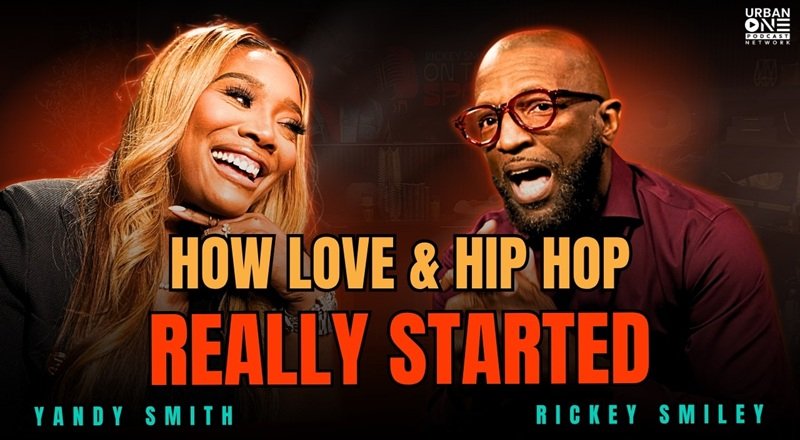
Yandy Smith learned this firsthand. Sitting down with Rickey Smiley on On The Spot, the Harlem native and Howard University graduate explained how Love & Hip Hop began. Around 2009, she was managing Jim Jones and saw a TV show in his family: Jones himself, his partner Chrissy Lampkin, and his mother, Nancy “Mama” Jones. She hired a camera crew with her own money, filmed a weekend on tour, cut a sizzle reel, and pitched it to a VH1 executive. She landed a development deal.
The Merger That Saved the Show
Then the project nearly fell apart. Jones pushed back against producers staging scenes from his real life, a funeral and a bail run among them, and a confrontation with a crew member put the deal at risk. Smith called her former boss from Violator Management, Mona Scott-Young, who was pitching a separate show about women in hip-hop. The two merged their concepts, kept the Jones family at the center, and Love & Hip Hop was born.
The franchise went on to expand into Atlanta, Hollywood, and Miami, and it employed hundreds of people over roughly 17 years. Smith’s contract captured almost none of that expansion.
What the Contract Left Out
Her music attorney negotiated the deal. That attorney came from the top tier of the music business, but by Smith’s account had little understanding of how television is structured. She received a producer credit and nothing more. She had no executive producer title and no attachment to the spin-offs. As she put it, you won’t find her name as a producer on Love & Hip Hop: Atlanta or Hollywood. Some executive producers who weren’t part of the original vision, she said, are now wealthier than she is.
Three Terms That Explain the Gap
- Derivative rights. In television, a hit show’s real value often comes from what grows out of it: spin-offs, new cities, international versions, and reunion specials. A creator who doesn’t negotiate a share of those derivatives owns one tree in what becomes a forest.
- Title hierarchy. “Producer” and “executive producer” are not cosmetic labels. Executive producer credits usually come with higher per-episode fees, backend participation, and decision-making power. Smith described feeling pushed aside on her own show, with people telling her what to do on a project that only existed because of her.
- Specialized counsel. Entertainment law is not one discipline. A lawyer who is excellent at record deals may be out of their depth on a television format deal, and that kind of mismatch can cost tens of millions of dollars.
A Pattern With Deep Roots
This pattern has a long history. Black artists have often been shut out of ownership through master recordings they didn’t own, publishing they signed away, and credits that went to someone else. The racial wealth gap is large: the Federal Reserve’s 2022 Survey of Consumer Finances put median white family wealth near $285,000 and median Black family wealth near $45,000. That gap is not only about income. It is about who keeps the asset when the value multiplies.
The Correction: Selling a Finished Asset
Smith’s newest project shows what she learned. She is executive producer of Indie Bosses, a docuseries about Black home-care entrepreneurs in Indianapolis, and this time her name is in the top credit. The cast financed the production 100% themselves, through six episodes plus a planned seventh and a reunion. Because the show arrives as a finished package, the cast can negotiate with networks as owners selling a completed product, not as talent asking for a chance. Smith’s other ventures follow the same logic: YELLE Skincare is now carried in Bloomingdale’s, and her Wynwood restaurant, Novo Miami, has lines out the door.
Strategic Playbook
1. Hire counsel who specializes in your exact deal type. Before you sign anything, ask a potential attorney how many deals they have closed in that specific medium in the past three years: television format deals, SaaS licensing, franchise agreements, or whatever applies to you. Having a good reputation in a related field does not qualify them. If your idea could expand into new formats, bring in a specialist for each one.
2. Negotiate for derivatives on day one. Any contract for intellectual property you originate should spell out what you get from spin-offs, sequels, regional editions, and adaptations. That should include a per-episode or per-unit payment and a credit that carries over automatically. Your bargaining power is at its highest before the project proves itself, because after that the other side no longer needs your goodwill.
3. Fight for the title that comes with control. Credits shape your pay and your power. An executive producer, managing partner, or co-founder title should come with defined rights, such as approval over key decisions, a say in budgets, and a share of the backend. If the other side won’t give you the title, insist on the economic rights that would normally come with it.
4. Finance what you can, so you sell instead of ask. The Indie Bosses model shows the advantage. When you fund the pilot, the prototype, or the first production run yourself, you sell a finished asset on your terms rather than giving up ownership in exchange for access. Even partial self-funding moves your negotiating position from asking for permission to setting the price.
Smith’s message to founders was simple: get your paperwork right. The dream may be yours, but the contract decides who profits from it.

