The $750,000 Exit: How Floyd Mayweather Bought His Freedom, Earned $750 Million, and Says He Lost $550 Million
A $750,000 buyout made him boxing’s richest fighter. Losing control of where the money landed, he says, cost him $550 million.
Inside the Deal That Made, and Nearly Unmade, Money Mayweather
The best check he ever wrote
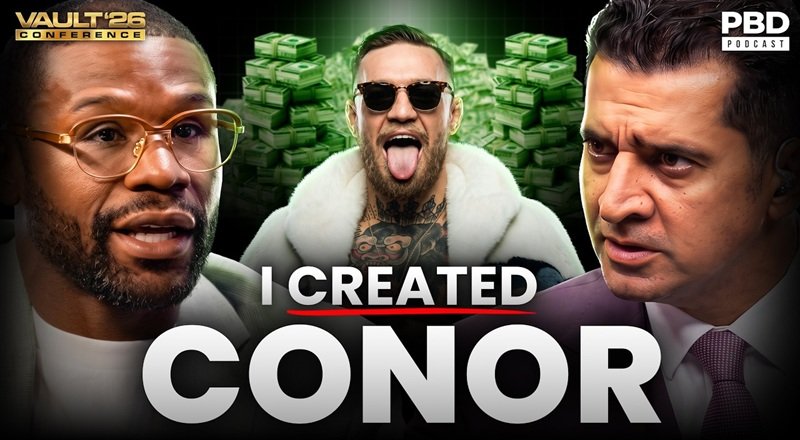
In 2006, Floyd Mayweather was boxing’s most gifted fighter and, on paper, someone else’s asset. His Top Rank contract had run out, but the promoter still held options on him: the right to extend the relationship on its own terms. Speaking with Patrick Bet-David, Mayweather explained the move. He had studied who was collecting the merchandise and ticket money, proposed a partnership, and was refused. So he asked what it would cost to walk. The answer was $750,000. He wrote the check.
Put that in deal language. An option is a claim on future earnings, and Top Rank sold its claim on Mayweather’s prime for less than a mid-level purse. He moved that upside into Mayweather Promotions. By his count, three fights after the exit (Canelo Álvarez, Manny Pacquiao and Conor McGregor) returned about $750 million. That is roughly a 1,000-to-1 return on the buyout. The Pacquiao fight alone remains the highest-grossing pay-per-view ever: more than 4.4 million buys and $410 million in revenue.
The lesson isn’t courage. It’s that he read the cap table. Talent earns a purse. Ownership earns the gate, the merchandise and the pay-per-view backend.
Where $550 Million Went
The same conversation carried the warning. Mayweather said a man he called “a father figure,” whom he would not name, took $350 million. A second, separate associate who was “helping me clean up business,” he said, took another $200 million.
Public filings fill in part of the first story. In February 2026, Mayweather sued Showtime and former Showtime Sports president Stephen Espinoza in Los Angeles County Superior Court, alleging they helped his longtime adviser Al Haymon misappropriate roughly $340 million. Haymon is not named as a defendant. The suit says fight revenue was wired to accounts Haymon effectively controlled, that Showtime still owes about $20 million from the 2015 Andre Berto fight, and that his new team was told key records were unavailable. These are allegations. No court has ruled on them.
His own description of the mechanism is the real takeaway. Nobody walked off with the money in one heist. Backend payments that should have gone to Mayweather Promotions, he said, went to “someone else account.” That is a custody failure, and it is the most common way high earners lose wealth: the money is earned correctly and routed incorrectly.
It hasn’t been free. Reporting this year has pointed to creditors pursuing parts of his car collection and a reported $54 million loan at 9% secured by his assets, signs of liquidity strain even as he says real estate is now his main income.
The Negotiator’s Floor
His explanation of the stalled Pacquiao rematch is a pricing lesson. He said a Netflix-linked offer, put together in part by the same man he accuses of taking $200 million, proposed identical guarantees for both fighters, though he says he was guaranteed four times Pacquiao’s money the first time. “He lose and he get the exact same as I get,” Mayweather said. “Absolutely not.” He now expects the rematch in 2027 with a $110 million guarantee, after a December exhibition with Mike Tyson. Those numbers are his and unconfirmed.
Leverage belongs to whoever is the draw. Accept parity when you are the asset and you reset your price for every deal after it.
The Body as the Balance Sheet
His money rule is blunt: “always put half up.” His life rule is no alcohol and no drugs, which he traces to his mother’s addiction and his father’s prison sentence. “Your body is your real wealth,” he said. His father’s first boxing lesson, that the less you get hit the longer you last, is why he can still ask for eight figures as he approaches 50. In financial terms, defense extends the life of your main earning asset.
Four Moves to Own Your Upside, and Keep It
- Price your options before someone else does. Audit every contract for options, rights of first refusal and non-competes. Ask what Mayweather asked: what does it cost to own this? Buyouts are cheapest before your breakout.
- Control custody, not just the contract. Every payment should land directly in accounts owned by your entity, with you as signatory and advisers limited to view-only access. Get statements straight from the bank, not from your manager. Mayweather’s losses, as he describes them, happened at the routing step.
- Separate the deal-maker from the money-keeper. “Trust but verify” means an annual audit by a CPA with no ties to your manager, written fiduciary agreements, and a firm rule that whoever sources your deals never controls your accounts. Corporations call this separation of duties.
- Build the second engine while the first is running. Mayweather bought real estate while still fighting. Move active income into assets that pay without you, and hold enough cash that one lawsuit or slow year doesn’t force you to borrow at 9% against your collection.