Lowe’s $250 Million Bet on the Skilled Trades, and What It Means for Black Wealth
The Bottom Line: A Fortune 50 retailer run by one of the country’s most prominent Black CEOs has turned the skilled trades into one of the best-funded workforce pipelines in the United States, and NVIDIA, Bank of America and Duke Energy have joined in. For Black workers, founders and investors, the paycheck is only the start. The bigger prize is equity: licenses, contracting firms, and the service contracts on the buildings this boom puts up.
Why Corporate America Is Paying to Rebuild the Trades Pipeline
On April 7, 2026, the Lowe’s Foundation multiplied its bet on the American tradesperson by five. The retailer’s independent 501(c)(3) arm raised its commitment to $250 million, with a target of training and developing 250,000 tradespeople by 2035. The original 2023 pledge was $50 million for 50,000 people. Five months later, on September 1, the foundation went bigger again. It launched the Building Futures Skilled Trades Coalition, which has more than 75 founding members and a goal of one million trained workers by the same deadline.
Look at who signed on. NVIDIA, the chipmaker at the center of the AI build-out. AT&T. Bank of America. Carrier. General Motors. DEWALT. Duke Energy. This is not charity theater. It is a supply-chain play, and skilled labor is the input in short supply.
The Math Behind the Shortage
Associated Builders and Contractors estimates that construction needs 349,000 net new workers in 2026 and 456,000 in 2027. ABC’s chief economist notes that most of the 2026 demand comes from retirements, not new growth. That detail matters. A shortage driven by demand can flip in a recession. A shortage driven by retirements is demographic, so it is locked in. According to figures in Lowe’s materials, for every five tradespeople who retire, only two come in. The Department of Education projects that as many as 2.1 million skilled trades jobs could go unfilled by 2030, costing the economy up to $1 trillion a year.
Then add the demand side: infrastructure spending, a long-running housing shortfall, and data centers, each one a small city’s worth of electricians and HVAC technicians. In one 2026 industry survey, 81% of firms with electrician openings said they struggled to fill them. When an input is scarce and buyers can’t do without it, its price goes up. In the labor market, that price is wages. More importantly, it is pricing power for whoever owns the firm.
How the Money Moves
The capital flows through Gable Grants: needs-based awards of $100,000 to $1 million, usually spread over two years. They go to public community and technical colleges and to nonprofits that run trades programs. The money pays for instructors, equipment, training space and credentials in carpentry, electrical, HVAC, plumbing and facilities maintenance. By mid-2026 the foundation had passed $60 million across 73 partners in 30 states, and it was on pace to reach its original 50,000-person goal in 2027, a year early.
The targeting is explicit. The foundation is focusing on “opportunity youth” (people ages 16 to 24 who are neither in school nor working), women, people of color, rural residents, and people coming out of the justice system. Put plainly, it is paying to train the groups that were long kept out of union halls and apprenticeship networks. That informal gatekeeping kept generations of Black craftsmen working as laborers instead of becoming licensed contractors.
The Ellison Factor
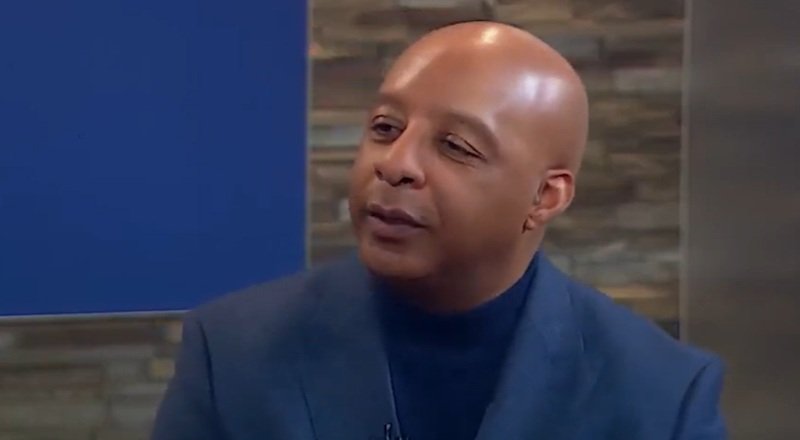
The messenger matters. Marvin Ellison started in 1987 as a part-time Target security associate making $4.35 an hour. He rose through Home Depot to run its U.S. stores, then led J.C. Penney, and has run Lowe’s since 2018. He grew up in Brownsville, Tennessee, where plumbers, electricians and mechanics were respected professionals, even as the wider culture sold the four-year degree as the only way up.
His argument about AI is blunt: AI, he says, “can’t climb a ladder to change the batteries in your smoke detector.” AI is putting pressure on administrative and analytical jobs, the white-collar roles many Black families came to see as the safe base of the middle class. That makes the trades a hedge.
The Wealth-Gap Angle
Here is what most coverage misses: a trade earns you a wage, but a trade business is an asset. The racial wealth gap is largely an ownership gap, in businesses, real estate and stocks. A licensed master electrician earns good money. A master electrician with a firm, a fleet of trucks, maintenance contracts and a list of commercial clients owns something that can be sold and borrowed against. And retiring baby boomers aren’t just leaving jobs open. They are putting thousands of trade businesses up for sale, many with no heir to take over.
Strategic Playbook
- Go for the license, not just the certificate. A short-term credential gets you hired. A journeyman or master license lets you pull permits, bid on jobs and hire a crew, and that is what turns a wage into a business worth something. Look up your state’s required apprenticeship hours now, and treat that time as an investment, not a waiting period.
- Buy a business from a retiring owner. Retiring owners of HVAC, plumbing and electrical shops need buyers. With SBA 7(a) loans and seller financing (where the owner lets you pay part of the price over time), buying a profitable firm with ongoing service contracts can be easier to finance than starting from scratch.
- Follow the coalition’s money. NVIDIA, Duke Energy and Carrier didn’t join for good press. Data-center electrical work, power-grid upgrades and commercial HVAC are where the volume and the profit margins are. Black-owned contractors should sign up for these companies’ supplier-diversity programs and go after subcontracting roles on the projects. Build up your bonding capacity early, too: a bond is the guarantee a contractor needs to win a public or large commercial job, and it often caps how big a contract you can take.
- Use your position in the pipeline. Community colleges and nonprofits near you may already hold Gable Grants, or may qualify for one. Sitting on their boards, partnering as an employer, or setting up hiring agreements gives Black professionals, churches and business groups a say in where graduates go to work. For stock investors, the trades boom shows up in equipment makers, building-products companies and engineering-services firms. Understand the theme before you buy any single stock, and remember that the foundation is philanthropy, not a direct driver of Lowe’s revenue.
This article is for information only and is not financial or investment advice.