Jay-Z vs. 50 Cent: The Real Battle Was Never Over Bars, It Was Over Who Controls the Budget
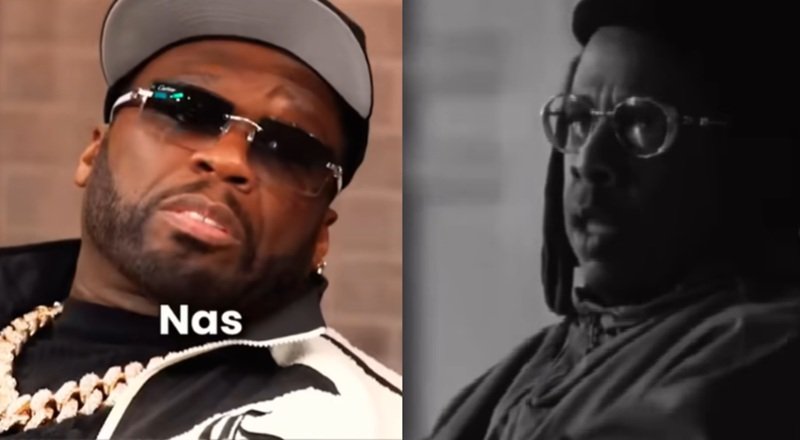
50 Cent’s latest Flagrant broadside says Jay-Z won the 2007 sales war through Def Jam’s checkbook rather than by out-rapping anyone, and that claim is a lesson in capital allocation. For Black founders, executives, and investors, the takeaway is blunt: the person who controls distribution and marketing spend often decides the winner before the product reaches the market.
Strip away the beef and what 50 Cent described on Andrew Schulz’s Flagrant this week is a corporate finance case study.
On September 11, 2007, Kanye West’s Graduation and 50 Cent’s Curtis hit shelves on the same day. Graduation moved roughly 957,000 copies in its first week. Curtis moved about 691,000. Hip-hop historians often treat that result as the moment commercial rap shifted away from gangsta bravado.
50 Cent sees it differently. Jay-Z was president of Def Jam at the time, a post he held from roughly 2004 to 2007, and 50 says Jay used that seat to put the label’s full resources behind Kanye. In his telling, Def Jam spent heavily, it worked, and Interscope, his own home, didn’t feel the need to match that spending because his track record was supposed to carry the album.
Same Parent, Rival Divisions
Here is the detail most fans skip. Def Jam and Interscope both sat under Universal Music Group. This was not two rival companies fighting. It was two divisions of the same parent competing for internal capital.
In corporate language, that is a capital allocation decision: a parent company deciding which business unit gets funded, how aggressively, and when. Think of a family that owns two restaurants on the same block. Whichever manager wins the argument over the ad budget usually gets the line out the door.
The Reasonable Doubt Question
50 Cent’s larger point goes past one release week. He points out that Reasonable Doubt debuted at No. 23 on the Billboard 200 in 1996. It was respected, but it was not a commercial event. Anniversary marketing has since turned it into a monument.
His claim is that Jay-Z is a phenomenal artist who is even better at positioning: stadium pairings with Eminem, executive titles, award-season visibility, and strategic alliances that create the appearance of dominance even in years when the sales charts belonged to DMX, Ja Rule, or 50 himself.
Two Paths to the Same Lesson
You don’t have to agree with him to see that both men proved the same economic principle from opposite directions.
Jay-Z turned positioning into equity. He rose from artist to label president, founded Roc Nation, and built ownership stakes that became exits. He sold a reported 50% of Armand de Brignac champagne to LVMH in 2021. Square, now Block, bought a majority of Tidal in a deal valuing it near $297 million. A majority of D’Ussé cognac went to Bacardi in a widely reported 2023 deal. Forbes named him hip-hop’s first billionaire in 2019. His music was the entry ticket. Ownership was the wealth engine.
50 Cent is not just a rapper complaining about marketing budgets. He took an equity stake in Glacéau, the maker of Vitaminwater, rather than a flat endorsement fee. When Coca-Cola bought the company for $4.1 billion in 2007, the same year as the Curtis loss, his payout was widely reported in the tens of millions. Later he built the Power television franchise with Starz and launched spirits brands. He lost the first-week numbers. He won the equity trade.
Why This Matters for the Wealth Gap
The Federal Reserve’s 2022 Survey of Consumer Finances put median Black family wealth at about $44,900, compared with roughly $285,000 for white families. That gap is not mainly about talent or effort. It comes from ownership, access to capital, and proximity to the people who decide where resources go.
The Graduation vs. Curtis story is that same dynamic playing out in public: two elite talents, with the outcome tipped by whoever held the internal budget.
The online reaction split along familiar lines. One side treats 50’s analysis as long overdue industry truth-telling. The other calls it revisionism that ignores the quality of Jay-Z’s catalog. Both sides miss the more useful point. In any market, product quality is necessary but not sufficient. Distribution, marketing capital, and institutional sponsorship decide scale.
Strategic Playbook
1. Map the allocator before you launch. Whether you are pitching a product inside a Fortune 500 company or raising a fund, find out who controls the budget and what they need to look good. 50 Cent’s admitted mistake was assuming his track record would earn him resources. Track records get you into meetings. Sponsors get you funded. A sponsor who will spend their own political capital on you is worth more than a mentor who only gives advice.
2. Trade fees for equity whenever your leverage allows it. 50’s Vitaminwater deal and Jay-Z’s spirits exits share one feature: both men took ownership instead of a check. If you are a consultant, creator, or early employee, negotiate for equity, revenue share, or warrants. Fees are income. Equity compounds, and compounding is how wealth crosses generations.
3. Treat narrative as a balance-sheet asset. The Reasonable Doubt anniversary push shows that a well-maintained story can raise the value of an existing catalog decades later. For business owners, that means documenting your milestones, controlling your brand assets, and owning your intellectual property outright, so every future re-release, licensing deal, or acquisition pays you rather than an intermediary.
4. Stop measuring yourself only on peak numbers. 50 Cent’s peak was arguably higher. Jay-Z’s durability built the bigger fortune. Investors should apply the same logic: one breakout quarter matters less than a business structured to keep earning, to be sold, or to be passed on. Build for the exit and the estate, not the first-week headline.