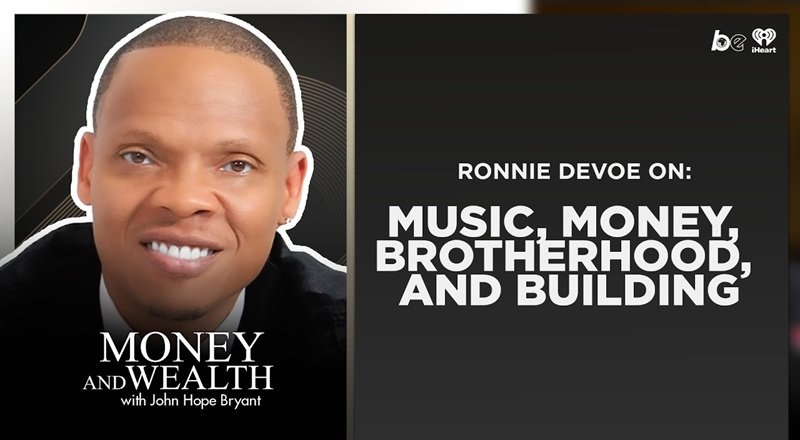
From Bankruptcy to Brokerage: How Ronnie DeVoe Turned Rock Bottom Into Real Estate Equity
The Bottom Line: Within two years of the New Edition reunion, Ronnie DeVoe was bankrupt, foreclosed on, and renting, then rebuilt as a licensed broker who owned his own firm by 2006. His comeback shows what happens when earned income is never converted into owned assets, and how a low-cost credential can reopen the door to equity.
Six Egos, One Tour, Zero Plan
In 1996, fans got the reunion they had begged for. The Home Again album put all six members of New Edition back together, Bobby Brown included. DeVoe calls the tour that followed a train wreck.
The problem wasn’t talent. It was governance. Each member came back with a solo-era playbook: Bobby built his success one way, Bell Biv DeVoe another, Johnny Gill a third. Six strategies, no shared operating agreement. By the end, six had become four, finishing a separate run with promoter Al Haymon.
The deeper damage was on the balance sheet. DeVoe describes caviar, top hotels, and spending money “in real time,” as fast as it arrived. No allocation plan. No share of gross routed into investments. No delayed gratification.
Finance has a name for this: lifestyle inflation funded by volatile, non-recurring income. Touring revenue looks like a salary but behaves like a startup’s: lumpy, front-loaded, uncertain. Treat a peak year as your baseline and you end up high-income and asset-poor. Income is what you make. Wealth is what you keep, and what your capital earns while you sleep.
Rock Bottom and a Seed in a Classroom
By 1998, DeVoe had filed for bankruptcy. Foreclosure followed on his Los Angeles-area home. By 1999 there was no New Edition and no Bell Biv DeVoe on the calendar, and he was renting a townhouse in Canyon Country.
Just before losing the house, he walked up the street to Pierce College and took a business course. The assignment: research and track three stocks for a semester. He chose Qualcomm and Yahoo, two defining names of the late-’90s tech run, and finished in the green to a standing ovation.
The grade mattered less than the shift in thinking. Everything DeVoe had built came from sweat equity, talent converted into revenue. The class introduced the other side of the ledger: deploying capital to generate capital. As host John Hope Bryant put it, money makes more on money than it ever makes on labor.
That distinction sits at the center of the racial wealth gap. The Federal Reserve’s 2025 Survey of Consumer Finances put median Black family net worth at about $37,000, against $332,000 for white families, and Black families were the only group whose inflation-adjusted median fell after 2022, down 25%. A gap that wide doesn’t close on wages. It closes on ownership.
Seventy-Five Hours to a New Career
In November 2001, DeVoe drove a U-Haul to Atlanta with “two nickels to rub together.” What he had was an old passion from high school drafting and architecture classes.
Scouting duplexes and quads in the West End, he met agent Mary Gil, still his mentor. Her pitch: 75 hours of coursework and he’d have the same access she had. DeVoe ran the math. Matching his New Edition income in medicine meant more than a decade of school. Real estate offered a credible path in about a month.
He got licensed, joined RE/MAX in Cobb County in 2002, and launched his own brokerage in 2006, bringing the agents he’d recruited with him. That last move is the real wealth step. An agent earns commissions. A broker-owner earns a share of every agent’s production: the difference between a paycheck and a platform.
Why the Working Class Is the Business
DeVoe could have sold to celebrities. Instead, remembering the house he bought his mother at 18 or 19, he built around first-time buyers.
It’s also sound strategy. Entry-level housing is the market’s deepest, steadiest segment, and the need is acute: the Black homeownership rate stood at 44.2% in late 2025. Atlanta, where he planted his flag, leads large metros in Black homeownership at 55.3%.
Strategic Playbook
- Write the operating agreement before the reunion. Any partnership, whether a band, an LLC, or inherited family property, needs decision rights, revenue splits, and exit terms in writing before the money arrives. Ego is a governance problem. Solve it with documents.
- Pay your assets first on every windfall. If your income is lumpy (commissions, bonuses, contracts, touring), set a fixed percentage that moves automatically into a brokerage account, retirement vehicle, or down-payment fund the day it lands. Size your lifestyle to your lowest year, not your best.
- Price credentials by return on time. DeVoe weighed 75 hours against twelve years. Before any degree or certification, estimate months to first dollar and realistic earnings. Real estate, insurance, and securities licenses are among the fastest on-ramps to commission income and industry access.
- Climb from labor to platform. Agent to broker-owner is the jump from earning on your hours to earning on a team’s. In any field, identify the next rung where you capture revenue from systems or people, not only your own output.