Own the Whole House: Tyler Perry’s Blueprint for Turning Creative Work Into Generational Wealth
A Fee Pays You Once. Ownership Pays Your Grandchildren.
Tyler Perry’s fortune came less from what he was paid for his work than from what he refused to sign away. For Black founders and creators dealing with institutions that have long taken most of the value of Black labor and culture, his ownership-first approach is the clearest model in modern media for turning talent into an asset that keeps paying the next generation.
From Rent to Deed: Why Perry Turned Down the Standard Deal
“I wanted to be the man who owned the house.”
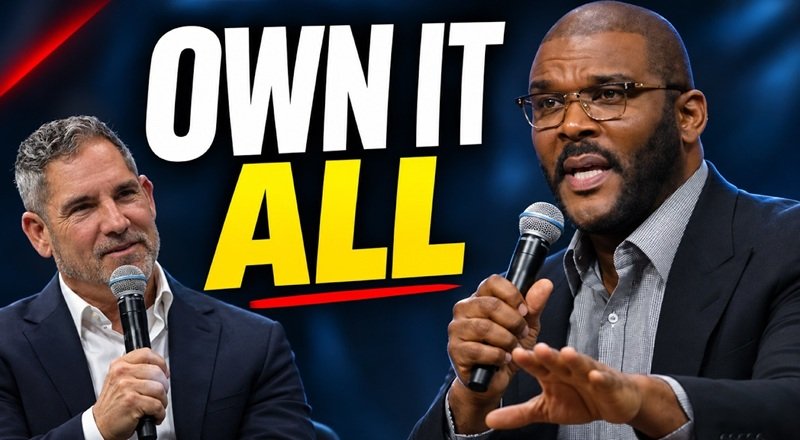
Tyler Perry said it plainly on stage with Grant Cardone at Growth Con, and the line explains his whole balance sheet. Perry says he owns 100% of every film and every television show he has made. That includes more than 1,800 hours of television, a library he says is entirely his. His films, by his own rough estimate, have grossed close to $1 billion at the box office. His payroll last year, he said, was $152 million.
Those numbers matter less than the structure behind them. In Hollywood, most talent is paid in one of two ways: a fee (cash up front, ownership stays with the studio) or “back-end points” (a share of profits, defined by the studio’s own accounting). Both leave the studio holding the intellectual property (IP), the underlying rights to the work. IP is what keeps earning: licensing fees, streaming deals, syndication, sequels and spin-offs. Think of the fee as rent and the IP as the deed. Renters get paid once. Owners get paid every time someone moves in.
The Deal They Thought Was Worthless
Perry understood this from the start. When he made his first film deal, he told the studio he had to own the work. He recalls the executives agreeing easily: they thought the material was worth nothing and expected it to fail. That was the deal for Diary of a Mad Black Woman (2005), released with Lionsgate. Perry kept ownership, the film became a hit, and in his words, the studio now regrets not owning it.
The lesson here goes beyond confidence. It is about information asymmetry, the gap between what you know about your asset and what the other side knows. Perry had already built an audience through years of touring stage plays across the country’s Black theater circuit. The studio saw an unknown filmmaker. He saw proven demand. His advice: don’t walk into the room trying to impress them with your resume when you have a secret weapon. Make the best deal you can, because they don’t know what you have.
That kind of mispricing is not new for Black creators. For generations, Black musicians, writers and performers made culture that other people owned: masters signed away, publishing sold cheap, likenesses licensed for one-time fees. The racial wealth gap is partly a story of income that never became equity. Perry’s approach reverses it.
From Content to Concrete: The Studio as a Hard Asset
His studio shows the strategy at the scale of real estate. Tyler Perry Studios in Atlanta, built on the former Fort McPherson Army base, covers 330 acres with 12 sound stages, and Perry says it is the largest studio in the country. His point on stage: he has no partners. Owning the facility means production spending comes back to his own company instead of going to a landlord, and the land itself is a hard asset that can rise in value apart from any film.
He credits the mindset to his father, who taught him “in reverse.” Perry grew up with a father who was harsh and abusive, and he describes building his life by doing the opposite of what he saw. The same logic shaped his business: where the previous generation worked for someone else’s house, he would own his.
Ownership Is Also an Operating Model
Perry’s comments on management show that keeping ownership requires discipline once you have it.
Hiring as leverage. Perry described employing formerly incarcerated people who could not get hired elsewhere, including one man who served 21 years. Their work ethic, he said, comes from knowing what that chance means. Owners set hiring policy. Employees don’t.
Knowing every job. Perry says there is no job in his company he cannot do himself, which lets him spot when a task is taking far longer than it should.
Trusting leaders. When a new executive wanted to restructure a division and replace people Perry valued, Perry backed him publicly and completely. The results came, and Perry learned to trust the people he puts in place.
Protecting the owner’s time. Perry said he could have paid for a Harvard education a thousand times over with the time he wasted on tasks below his role. If the hour you spend mopping the floor could be spent on work that earns ten times more, pay someone else to mop it. That is opportunity cost, the value of the best option you gave up.
Strategic Playbook
1. Separate the fee from the asset in every deal. Before you negotiate cash, ask who owns the IP, the masters, the code or the client list when the contract ends. If a counterparty argues hard to keep ownership while calling your work low-value, the price is wrong. Trade a lower fee for kept rights when you have evidence of demand.
2. Build proof of demand before you walk into the room. Perry’s stage-play audience was his leverage. For founders, that means paying customers, a waitlist, retention data or a direct-to-consumer audience you own (email lists, not just social followers). The more demand you can show that the other side can’t see, the more rights you can keep.
3. Turn operating cash into hard assets you control. Perry moved from owning content to owning the place where it is made. Look at your largest recurring cost (office rent, production space, equipment, software licenses) and ask whether owning it, through a separate holding company that leases back to your operating business, could convert an expense into equity. Talk to a tax professional before setting this up.
4. Delegate to protect the owner’s highest-value hours. Track your time for two weeks and price each hour against what your top activities earn. Anything you can hire out for less, hand off, then back the leaders you hire publicly. You can’t scale an asset if all your time goes to tasks below your role.
Ownership is not a single deal. It is a decision you make in every contract you sign.