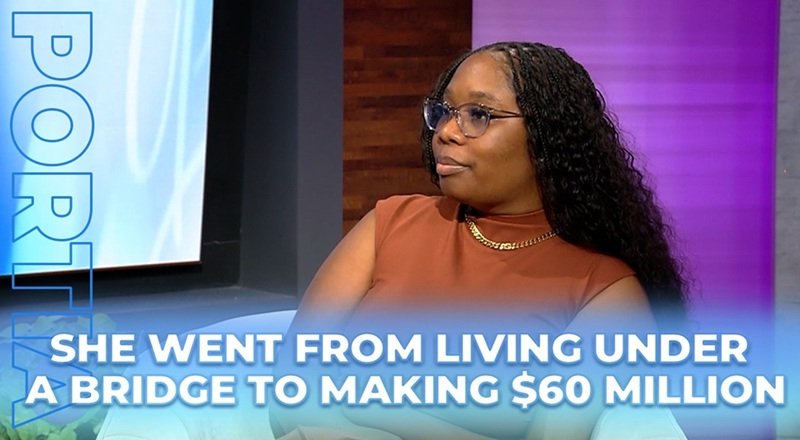
From sleeping under a bridge as a teen mom to developing subdivisions named after her children, Terrica Lynn Smith’s journey redefines resilience—and offers a masterclass in turning trauma into generational wealth.
Terrica Lynn Smith’s story begins not in a boardroom, but in foster care, where she was separated from her siblings and emancipated at 16. Her childhood was marked by unthinkable trauma—including being sold to a drug dealer at age 5—yet she refuses to be defined by victimhood. “I had to find out who that little girl was,” she says. “I had to stop being the victim and start being the warrior.”
Her turning point came when she gave birth to her son while homeless, living under a bridge in New Orleans. “He’s the promise,” she reflects. With no safety net, she bartered her food stamps for shelter, a decision that introduced her to the man who would unintentionally mentor her in real estate. “I didn’t know what a landlord was,” she admits. “But I saw how his properties turned into checks—and I wanted that for myself.”
Key Insight: Smith’s early exposure to real estate as a wealth-building tool planted a seed. “I knew I didn’t want to depend on the government again,” she says, referencing the desperation of Hurricane Katrina, where she was trapped for days with her children. That moment crystallized her resolve: “Real estate was the only thing I’d seen that looked like freedom.”
The $60 Million Blueprint: From $5,000 Properties to Subdivisions
Smith’s first investment property—a $5,000 purchase—was a far cry from the 1,000+ rental units and $60 million portfolio she owns today. Her path wasn’t linear; it required seven attempts to pass her real estate exam, a testament to her relentless mindset. “I was the dumbest one in the classroom,” she recalls. “But I knew it was passable. I was too invested to quit.”
Her strategy? Scaling with intention:
- Single-Family Rentals: She started with distressed properties, renovating them to build equity and cash flow.
- Subdivision Development: Today, she develops communities with 200+ rooftops, including one where street names bear her children’s names—Sheldon, Ata, Leila, and Tyreek (SALT). “I want them to own the doors, the houses, the land,” she declares.
- Legacy Focus: “This is a ‘God did it’ story,” she says. “I’m building so my children never have to knock on anyone’s door for opportunity.”
Why It Matters: Smith’s transition from survival to ownership underscores a critical truth: Real estate isn’t just about assets—it’s about reclaiming power. Her $60 million portfolio is a direct rebuttal to the systems that once failed her.
The Psychology of Wealth: Overcoming Scarcity and Self-Doubt
Smith’s journey wasn’t just financial—it was psychological. “I used to pray for a family,” she shares. “Now, I’ve been married 22 years with four children. That’s God’s full circle.”
Her mindset shifts fueled her success:
- From Scarcity to Abundance: “I didn’t know how I’d do it,” she admits. “But I knew I couldn’t stay stuck.”
- Faith Over Fear: She failed her real estate exam six times before passing. “After $500 in retakes, I was all in,” she laughs. “I had to figure it out.”
- Purpose-Driven Investing: “I think of every single mom who has a ‘war cry,’” she says. “My subdivisions are their answer.”
Cultural Impact: As a Black woman in real estate, Smith challenges stereotypes about who gets to build wealth. “I’m proof that your past doesn’t dictate your portfolio,” she asserts.
The SALT Subdivision: Building Generational Wealth Brick by Brick
Smith’s SALT subdivision—named after her children—is more than a development; it’s a declaration. “I want my son to see his name on a street and know: ‘If she did it, I can too,’” she says.
How She Did It:
- Land Acquisition: She targeted undervalued land in her Louisiana hometown, leveraging her local knowledge and network.
- Community-Centric Design: The homes are affordable yet high-quality, catering to first-time buyers and single parents.
- Legacy Branding: “This is my war cry,” she says. “Every street name is a reminder that we own our narrative.”
Result: A scalable model for Black wealth-building, where homeownership becomes hereditary.
The Terrica Lynn Smith Playbook: 5 Rules for First-Generation Investors
- Start Where You Are:
- “I began with $5,000 properties,” she says. “You don’t need perfection—just a plan.”
- Fail Forward:
- Seven exam attempts taught her resilience. “Failure is tuition,” she quips.
- Leverage Mentors (Even Unintentional Ones):
- The landlord who gave her shelter became her first lesson in cash flow.
- Build for Legacy, Not Just Profit:
- “I’m not just creating wealth—I’m ensuring my children never experience lack,” she emphasizes.
- Turn Trauma Into Testimony:
- “My story isn’t just mine,” she says. “It’s a blueprint for anyone who feels ‘frightened, scared, and alone.’”
Final Word: The Power of a War Cry
Terrica Lynn Smith’s $60 million empire isn’t just a financial triumph—it’s a cultural reset. “I’m no longer frightened, scared, or alone,” she declares. “Now, I’m the one holding the door open.”
For Fedha Report readers, her story is a masterclass in turning pain into power. “Real estate saved my life,” she says. “But my war cry built an empire.”
Pingback: The $3.125 Million Contract That’s Really Worth $272,500: What Jalon Daniels’ Rookie Deal Teaches About Guaranteed Money - Fedha Report