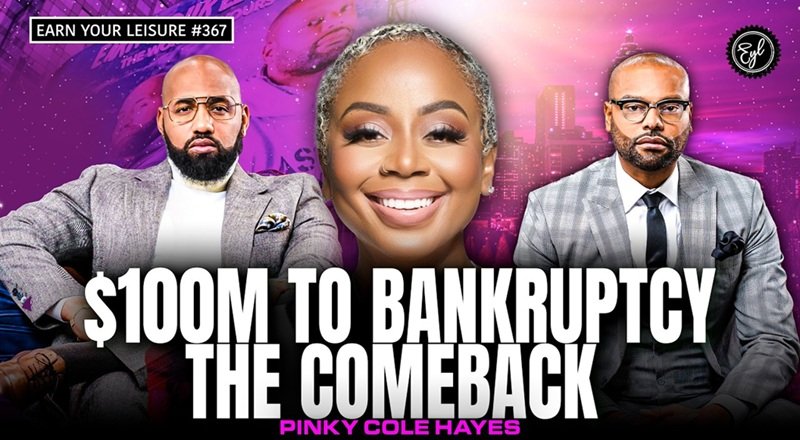
Pinky Cole Hayes, founder of Slutty Vegan, turned a $100M loss and public bankruptcy into a masterclass in resilience, restructuring, and reinvention—proving that setbacks are just setups for greater success.
Pinky Cole Hayes is no stranger to headlines. As the visionary behind Slutty Vegan, she built a $100M plant-based empire, graced magazine covers, and became a symbol of Black entrepreneurial excellence. But in 2024, her story took a dramatic turn: bankruptcy, legal battles, and the loss of her company. Far from a fall from grace, this chapter revealed the raw, unfiltered reality of entrepreneurship—where failure is not final, but a foundation for reinvention.
In a candid conversation with Earn Your Leisure, Hayes pulled back the curtain on her journey: the emotional toll of losing everything, the strategic use of bankruptcy as a tool, and the relentless pursuit of a billion-dollar comeback. Her story is not just about rebuilding a business; it’s about redefining success, leveraging visibility, and turning pain into purpose.
The Bankruptcy Decision: A Strategic Reset
Hayes’ decision to file for Chapter 11 bankruptcy was not an admission of defeat, but a calculated move to protect her assets and reorganize her financial future. After creditors illegally seized one of her properties—violating the automatic stay protection—she fought back in court and won. “Bankruptcy is a tool,” she emphasized, “not a scarlet letter.” Her transparency about the process demystified a topic often shrouded in shame, revealing that even multi-million-dollar businesses and high-profile entrepreneurs use bankruptcy to regain control.
Losing It All to Gain Everything
Hayes described the darkest moment of her career: waking up to realize she no longer owned the company she built. “I almost lost my mind,” she admitted. Yet, within 43 days, she bought it back—a testament to her resilience and resourcefulness. The experience forced her to confront hard truths about leadership, operations, and the cost of rapid scaling. “I led with my heart,” she reflected, “but leading with your heart can also make you go broke.”
The Two Engines of Entrepreneurship: Money and Visibility
Hayes’ comeback strategy hinges on two critical engines: money and visibility. After losing her financial engine, she leveraged her visibility—her brand, her platform, and her unapologetic authenticity—to rebuild momentum. Her appearance on The Real Housewives of Atlanta was not just a foray into reality TV; it was a strategic play to expand her audience, humanize her journey, and create new opportunities.
“You need at least one,” she explained. “The visibility can get you the money. The money can get you the visibility.” For Hayes, this meant using her platform to educate, inspire, and redefine what success looks like—not just in dollars, but in peace, freedom, and legacy.
Operations Over Popularity
Hayes’ most painful lesson? “You can have a Bentley with no engine.” Her early success masked a critical flaw: weak operations. Without robust systems, vendors took advantage, costs spiraled, and the business became unsustainable. “People will take advantage of you if you don’t know,” she warned. Today, she’s hands-on, immersing herself in franchising, research, and rebuilding her team with a focus on expertise and hunger.
The Role of Faith and Mental Health
Hayes’ journey underscored the emotional and spiritual toll of entrepreneurship. She spoke openly about mental health struggles, marital strain, and the pressure of public scrutiny. “Nobody understands what it feels like to fight for your life and still show up with a smile,” she shared. Her faith became her anchor: “God stripped me to rebuild me.”
The Power of Partnerships
From Robert Smith’s timely financial lifeline to her husband’s unwavering support, Hayes emphasized the importance of having the right people in your corner. “You need mentors, partners, and a team that can tell you ‘no,’” she advised. “Loyalty doesn’t pay the bills. Competence does.”
Redefining Black Wealth and Resilience
Hayes’ story is a cultural touchstone for Black entrepreneurs. In an era where social media fame often outpaces business fundamentals, her transparency about bankruptcy, restructuring, and reinvention challenges the narrative of overnight success. “We need to talk about the ugly parts,” she urged. “The crunches, the failures, the lessons—that’s where the real growth happens.”
Her Pinky Piggy Bank series, a YouTube project breaking down financial literacy through music and pop culture, is her latest effort to democratize entrepreneurship education. “If I can turn my pain into a lesson for someone else, that’s purpose,” she said.
A Blueprint for the Next Generation
Hayes’ influence extends beyond her business. She’s redefining what it means to be a Black woman in entrepreneurship—unapologetic, vulnerable, and victorious. Her journey resonates with a generation of founders who prioritize equity, operations, and mental well-being over performative success.
“I’m not just building a billion-dollar company,” she clarified. “I’m building peace, freedom, and a legacy.” Her story is a reminder that true wealth is not just financial—it’s spiritual, emotional, and communal.
Closing
Pinky Cole Hayes’ comeback is more than a business revival; it’s a cultural reset. By turning her bankruptcy into a blueprint, her pain into a platform, and her setbacks into setups, she’s proving that resilience is the ultimate currency.
As she prepares to franchise Slutty Vegan globally and expand her educational initiatives, Hayes’ message is clear: “Never quit. The comeback is always greater than the setback.”